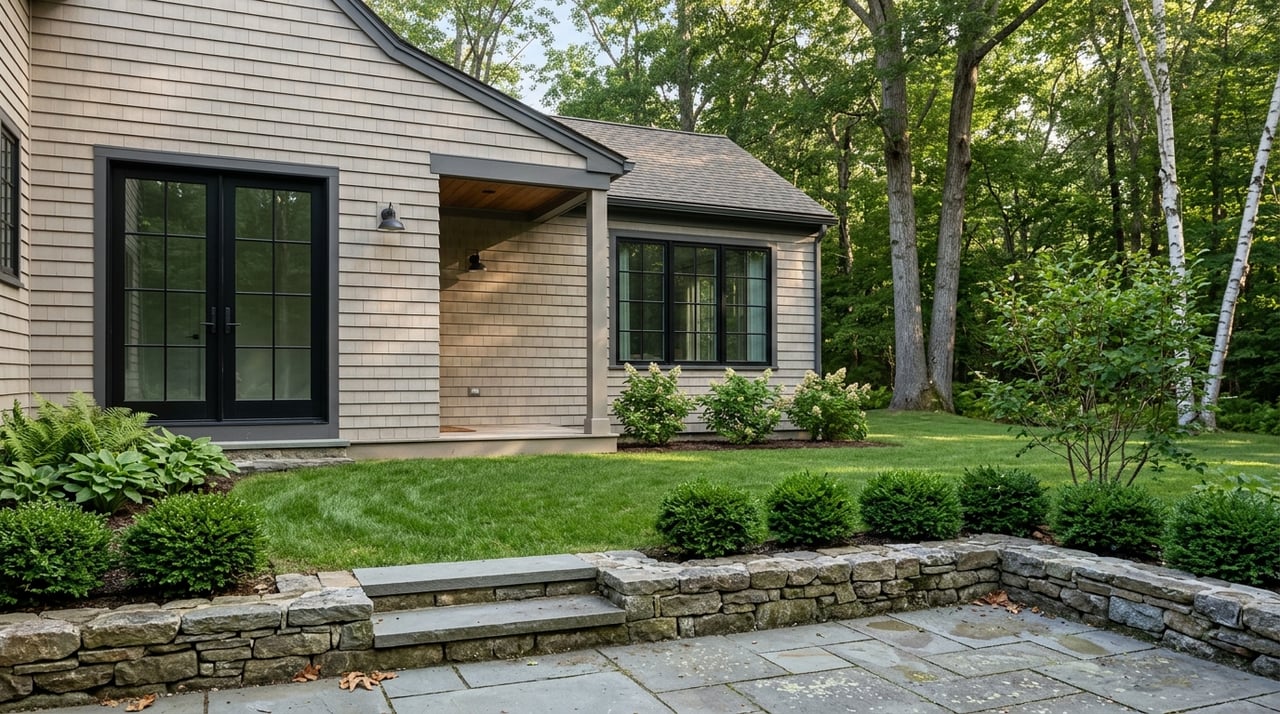
Hopkinton NH Neighborhood Guide to Village Life & Trails
May 14, 2026
May 14, 2026
If you want a New Hampshire town that feels grounded, scenic, and easy to get to know, Hopkinton deserves a closer look. For many buyers, the challenge is finding a place that offers everyday convenience without giving up open space, trail access, and a true village feel. Hopkinton stands out because it blends those priorities in a way that feels both practical and distinctly local. Here’s what to know if you’re exploring Hopkinton as your next move.
Hopkinton is not a one-note town. It officially includes three villages: Hopkinton Village, Contoocook, and West Hopkinton, each with a different role in the town’s layout and daily rhythm. That structure gives the community a village-centered feel instead of a more typical strip or corridor pattern.
Hopkinton Village is mainly residential, while Contoocook serves as the business sector with local shopping and essential services. West Hopkinton is more agricultural, which adds to the town’s rural backdrop. Town history materials describe the area as a small-town setting shaped by preserved history, natural scenery, working farms, and a mix of shops and services.
That balance is easier to appreciate when you look at the scale. Census QuickFacts estimate about 6,146 residents in 2024 across 43.3 square miles of land, or 136.6 people per square mile. If you are looking for a place that feels less crowded while still offering a connected local center, that low-density pattern may be part of the appeal.
One of Hopkinton’s biggest strengths is that different parts of town support different kinds of daily life. Planning documents note that Hopkinton Village became more residential after I-89 redirected through-traffic, while Contoocook evolved into the place for shopping and essential services. For buyers, that often translates into a town that feels more settled and neighborhood-oriented.
In practical terms, you can think of Hopkinton Village as the quieter residential heart and Contoocook as the activity hub. That does not mean one is better than the other. It simply means your day-to-day experience may look a little different depending on where you focus your home search.
If you are relocating and trying to picture the area, this setup can be helpful. Instead of one broad town center doing everything, Hopkinton offers smaller, more defined places with their own character and function.
For many people, Hopkinton’s outdoor access is not just a nice extra. It is part of what shapes the lifestyle. The town conservation program highlights a strong network of protected land, trails, and public recreation areas that support use across the seasons.
A standout feature is the Hopkinton Village Greenway, a 4 to 5 mile trail loop around the village center. It links Hawthorne Forest, Kimball Lake, Ransmeier Woods, and other conserved lands, with nearly 400 protected acres around the village center. That kind of trail access close to residential areas can make it easier to work outdoor time into an ordinary week.
Another popular option is Hawthorne Town Forest, a 111-acre parcel just east of Hopkinton Village. It includes a 1.7-mile loop and is described by town conservation materials as feeling surprisingly remote for being so close to town. If you value the idea of stepping onto a trail without a long drive, that matters.
Hopkinton also offers variety when it comes to recreation. The Horne Town Forest and Contoocook Overlook Trail add a 2.2-mile loop with river views near the meeting point of the Blackwater and Contoocook Rivers. Bohanan Farm trail descriptions also note routes that work well for cross-country skiing because of relatively level terrain and wide paths.
Town recreation information points to warm-weather and winter use in one community. Kimball Pond offers swimming lessons, fishing, and canoeing. The Contoocook River can be accessed near the Lewellen Gazebo for swimming, fishing, and boating, while the fairgrounds host groomed cross-country ski trails and a maintained ice rink in winter.
Beyond town-owned land, conservation materials also reference public recreation opportunities at places like Mast Yard State Forest, the Sweatt Preserve, Smith Pond Bog, Chase Preserve, and Elm Brook Park at Hopkinton-Everett Lakes. If your ideal home search includes access to trails, water, and seasonal recreation, Hopkinton gives you several ways to enjoy that.
For buyers who want even more outdoor flexibility, Hopkinton-Everett Lakes expands the recreational picture. The U.S. Army Corps of Engineers describes it as a multi-use recreation area with Elm Brook Park, a swim beach, boat ramp, picnic shelters, and a short nature trail. Recreation.gov also notes boating, swimming, hiking, fishing, picnic shelters, and a playground at Elm Brook Park.
The area also includes roughly 26 miles of designated OHRV trails and more than 30 miles of snowmobile trails. That range of uses can be especially appealing if you want a location that supports different hobbies without needing to leave the broader area. It adds another layer to Hopkinton’s strong outdoor identity.
If you are shopping in Hopkinton, it helps to know what the housing stock tends to offer. Town housing documents say residents value the town for its rural character, small-town feel, historic housing, and single-family homes. Those same documents identify single-family homes as the predominant housing type.
A large share of the housing stock reflects growth from earlier decades rather than recent construction. The housing chapter notes a boom in larger single-family, multi-bedroom homes during the 1980s and 1990s, with much slower growth after 2000. In fact, only 9.3 percent of the town’s total housing stock was built after 2000.
That can shape your expectations as a buyer. In many cases, you may be comparing established homes with mature settings rather than large numbers of brand-new developments. Depending on your goals, that may be a plus, especially if you value lot size, traditional New England character, or a more established feel.
Hopkinton’s housing profile also points to a community with many long-term homeowners. The town housing chapter reports that about 85 percent of homes have two or three bedrooms, and current Census QuickFacts show an 87.3 percent owner-occupied housing rate. The current median owner-occupied home value is reported at $506,900.
That does not mean every home will fit the same buyer. Planning discussions in town documents mention interest in more housing variety, including senior housing, two-family homes, apartment conversions, condos, townhouses, and downsizing or workforce options. Still, those references are best understood as planning direction rather than the dominant inventory you should expect today.
For most buyers, the main takeaway is simple: Hopkinton is still largely a single-family home market with an established residential pattern. If that aligns with what you want, the town may feel like a strong fit.
Village character matters, but so does the practical side of living somewhere. Hopkinton keeps many civic essentials close by. Town hall is on Main Street, the police department is on Hopkinton Road, the fire department is in Contoocook, the town library is at 61 Houston Drive, and the school district office is on Maple Street.
The local school district serves preschool through grade 12 through Harold Martin School, Maple Street School, and Hopkinton Middle High School, with elementary and secondary campuses split between Hopkinton and Contoocook. For buyers evaluating logistics, that helps show how the town’s two main village centers support everyday routines.
Census data also suggests a fairly settled community profile. About 89.0 percent of residents lived in the same house one year earlier, 19.9 percent of residents are age 65 or older, 18.8 percent are under 18, and the mean commute is 22.2 minutes. Those numbers help paint a picture of a town where many people stay put and where daily travel may remain manageable.
Hopkinton can appeal to different kinds of buyers for different reasons. If you are relocating to New Hampshire, it offers a useful mix of village identity, access to outdoor recreation, and a residential setting that feels established rather than overly built up. If you are moving locally, you may appreciate how clearly the town’s villages divide residential life, services, and open land.
It may be especially worth a look if you want:
As with any move, the right fit comes down to your priorities. Some buyers want newer inventory and more housing variety, while others are looking for character, conservation land, and a more rooted feel. Hopkinton tends to speak most clearly to that second group.
Towns like Hopkinton are easiest to understand when you go beyond a map search. A home in Hopkinton Village may offer one kind of lifestyle, while a property closer to Contoocook or West Hopkinton may offer another. Even in a relatively small town, those differences can affect how connected, walkable, quiet, or recreation-oriented your day-to-day life feels.
That is why local guidance matters. If you are comparing Hopkinton with Concord, Bow, Dunbarton, or other nearby towns, it helps to have someone who can translate the details into real decision-making. From home style and location trade-offs to village feel and outdoor access, the context matters as much as the listing.
If you’re thinking about buying or selling in Hopkinton or nearby, Darcy Mantel can help you make sense of the market with clear advice, local insight, and a steady strategy tailored to your goals.
Stay up to date on the latest real estate trends.
I don't just list homes-I create customized selling strategies that showcase what makes your property special. My commitment extends beyond the sale to ensure a smooth transition to your next chapter. And for my Buyers, I have proven strategies to help you win in this competitive market.
197 N Main St Concord, NH 03301