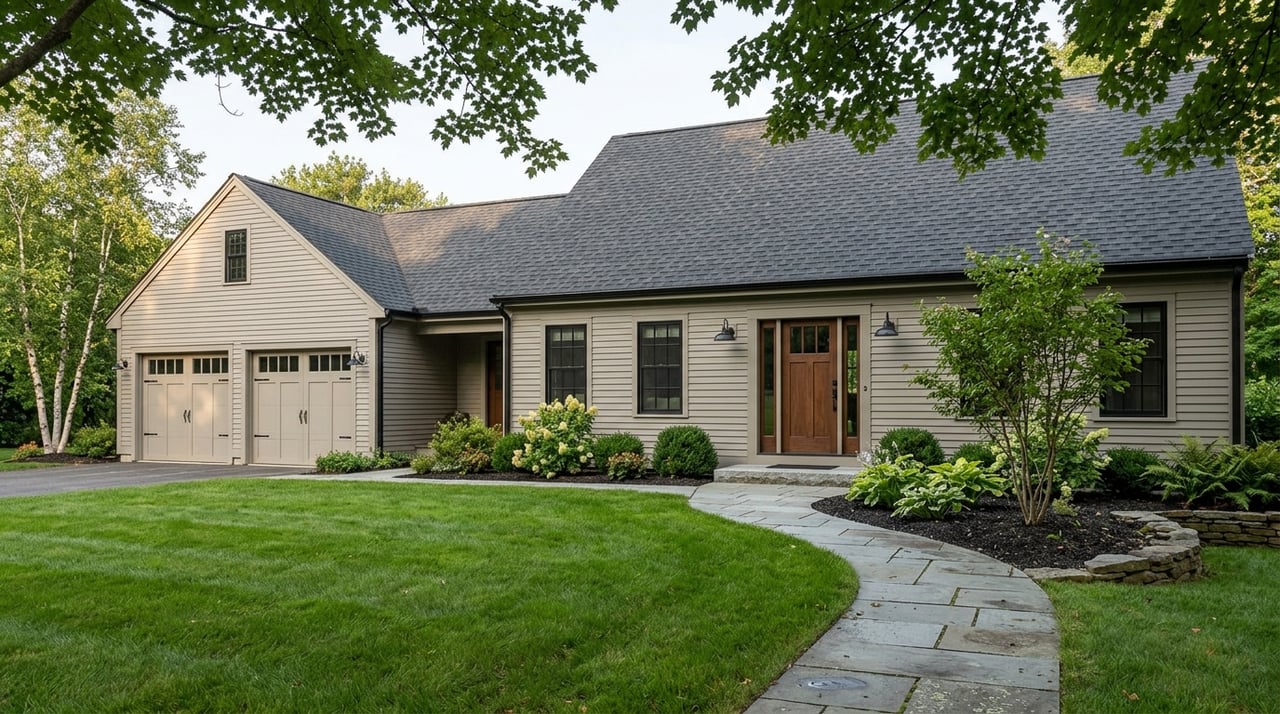
Choosing Dunbarton NH Or Nearby Cities For Your Next Home
May 21, 2026
May 21, 2026
Wondering whether Dunbarton should be your next home base, or if a nearby city might fit your life better? That choice can feel tricky because each community offers a different mix of space, commute patterns, housing types, and day-to-day convenience. If you are comparing Dunbarton, Bow, Concord, and Manchester, this guide will help you sort through the trade-offs so you can focus on what matters most to you. Let’s dive in.
Before you compare home prices or lot sizes, think about how you want your week to feel. Your commute, how often you run errands, whether you want transit options, and how much quiet you prefer all shape the right answer.
Dunbarton, Bow, Concord, and Manchester are close enough to compare, but they live very differently. The best fit often comes down to whether you want a more rural setting, a town-centered lifestyle, or a city experience with more services and transportation choices.
Dunbarton stands out for buyers who want a quieter, lower-density setting. Official town materials describe it as historically rural, and the town had a 2020 Census population of 3,005 with 1,171 housing units and about 100 people per square mile.
That small-town scale shows up in the housing pattern too. From 2018 through 2023, Dunbarton reported 85 single-family permits, 12 accessory dwelling unit permits, and no multifamily permits, which points to a market centered mostly on detached homes.
If Dunbarton is on your short list, these points help define daily life there:
For many buyers, that setup is exactly the appeal. You may get more privacy, a calmer setting, and a home search focused on detached properties rather than a broad mix of condos, apartments, or multifamily options.
Dunbarton is a driving-first town. The town profile shows 87.6% of workers drove alone, 7.7% carpooled, 9.7% worked at home, and the mean travel time to work was 31.3 minutes.
That matters if you expect to drive most places anyway. If you need public transit, shorter city commutes, or more backup transportation options, Dunbarton may feel less convenient than Concord or Manchester.
Bow often appeals to buyers who want a town feel but need easier highway access. The town says it is about 5 miles south of Concord and 12 miles north of Manchester, and it emphasizes its location at the crossroads of I-89 and I-93.
That makes Bow a strong middle ground. You still get a community that values rural feel and land conservation, but you are positioned more directly for travel north or south.
Current QuickFacts show Bow with:
Bow can be a good fit if you want a suburban town setting with strong highway convenience. Compared with Dunbarton, it may suit buyers who still want space and a town atmosphere but do not want to feel quite as removed from major routes.
For households comparing school arrangements, there is a practical difference between the two towns. Bow offers elementary, middle, and high school facilities in town, while Dunbarton operates grades K-6 locally and tuitions grades 7-12 to Goffstown.
That does not make one better than the other. It simply means your preferred school setup may influence which town feels more comfortable for your household.
Concord offers a more urban option that still feels manageable for many buyers. It has a population of 43,976, with a 56.8% owner-occupied rate, a $350,900 median owner-occupied home value, a $1,441 median gross rent, a 23.0-minute mean commute, and an $84,902 median household income.
Compared with Dunbarton or Bow, Concord brings more infrastructure and transportation options into the picture. For some buyers, that means a better balance between convenience and size.
Concord Area Transit has provided fixed-route service and two demand-response services since 1989. The city also describes its transportation policy as a complete-streets system, and it notes that Concord was New Hampshire’s first Bicycle Friendly Community.
Concord also has the Concord Municipal Airport, a 614-acre general aviation facility about two miles east of the city center. On the housing side, city revaluation materials reference manufactured home parks and condo developments, which suggests a broader mix of property types than you would typically expect in Dunbarton.
If you want more choices in how and where you live, Concord may give you a wider search. That can be helpful if you are open to condos, manufactured housing, or other housing formats beyond detached single-family homes.
Manchester is the largest and most city-oriented option in this group. QuickFacts show 115,644 residents, a 48.7% owner-occupied rate, a $365,600 median owner-occupied value, a $1,564 median gross rent, a 23.9-minute mean commute, and an $81,007 median household income.
For buyers focused on convenience, Manchester offers the broadest transportation network here. The city lists airport access, Boston bus service, city bus service, and taxi service, while the Manchester Transit Authority has provided public transportation since 1973 and operates the free Green DASH downtown shuttle.
Manchester-Boston Regional Airport also offers easy highway access and non-stop jet service, according to the city. If you want the strongest mix of transportation choices, services, and city amenities, Manchester may be the easiest fit.
The trade-off is that it will generally feel more urban than Dunbarton, Bow, or even Concord. For some buyers that is a major benefit, and for others it is exactly why they keep looking farther out.
When buyers compare these four areas, the decision usually becomes clearer when they rank their priorities. Start with the things that will affect your daily life the most.
If commute and access lead your decision, Bow offers especially strong highway positioning because of I-89 and I-93. Dunbarton is more car-dependent, Concord adds local transit, and Manchester offers the most transportation redundancy.
If you are focused on detached homes and open space, Dunbarton is a clear match. Bow can offer a similar feel in a more premium, owner-occupied market, while Concord and Manchester may make more sense if you want condos, apartments, rentals, or a wider ownership mix.
As you move from Dunbarton and Bow toward Concord and Manchester, you generally gain more convenience, transit, and service density. As you move the other direction, you tend to gain more quiet, privacy, and town character.
Neither side is right or wrong. The goal is choosing the environment that supports the way you actually live.
| Location | Best fit for | Housing feel | Transportation feel |
|---|---|---|---|
| Dunbarton | Buyers wanting a quiet rural home base | Mostly detached single-family homes | Car-dependent, no public transit |
| Bow | Buyers wanting town feel with strong highway access | Owner-occupied suburban market | Excellent highway access |
| Concord | Buyers wanting a balanced city option | Broader mix including condos and manufactured housing references | Transit available, more infrastructure |
| Manchester | Buyers wanting the most convenience and city options | More urban mix | Bus, airport, taxi, Boston bus access |
Dunbarton belongs on your shortlist if you want a rural home base within reach of Concord and Manchester, but you do not need daily transit or a city-style housing mix. It can be especially appealing if your priority is a detached home, a lower-density setting, and a lifestyle built around driving rather than walkable services.
If that sounds like you, Dunbarton may not feel limited at all. It may feel focused, peaceful, and easier to picture as home.
There is no one-size-fits-all answer here. Dunbarton offers quiet and space, Bow offers a town-centered lifestyle with strong highway access, Concord offers a balanced city option with more housing and transit variety, and Manchester offers the broadest urban convenience.
The right move is the one that matches your routine, your housing goals, and the kind of day-to-day life you want after closing. If you want help weighing those trade-offs in a practical way, Darcy Mantel can help you compare communities, narrow your options, and move forward with confidence.
Stay up to date on the latest real estate trends.
I don't just list homes-I create customized selling strategies that showcase what makes your property special. My commitment extends beyond the sale to ensure a smooth transition to your next chapter. And for my Buyers, I have proven strategies to help you win in this competitive market.
197 N Main St Concord, NH 03301